
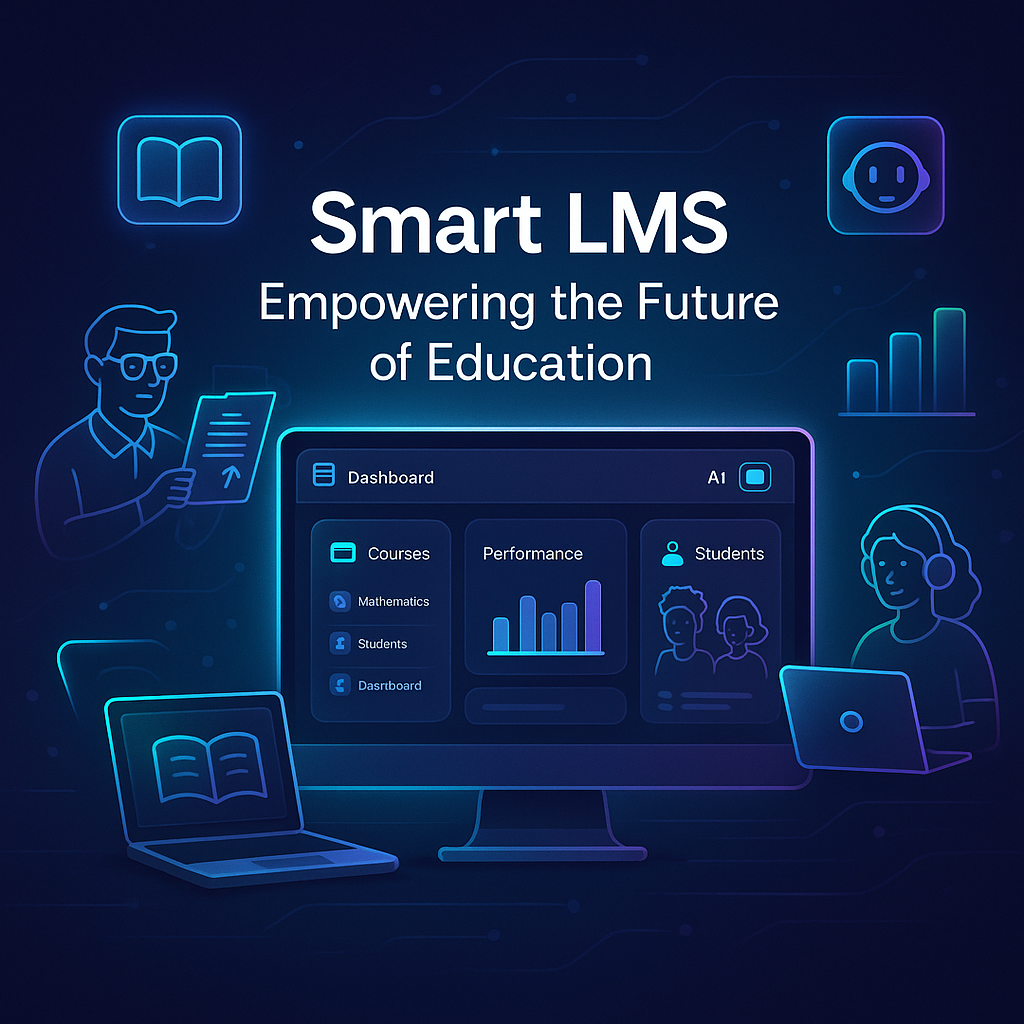
Smart LMS: A Modern Solution for Educational Management
Abstract:
This project presents a comprehensive Learning Management System (LMS) designed to simplify and streamline educational processes for administrators, faculty, and students. Using Python with Flask as the backend framework and MySQL for data management, the system provides functionalities for user management, class assignments, system monitoring, material access, and performance tracking. The modular design ensures scalability, while its user-friendly interface enhances usability. This LMS aims to mitigate the inefficiencies present in traditional systems by integrating modern technology, ensuring a seamless teaching and learning experience.
Introduction:
In the digital age, educational institutions are increasingly adopting Learning Management Systems (LMS) to manage academic activities efficiently. A well-designed LMS facilitates user roles, including administrators, faculty, and students, allowing them to interact with the system according to their needs. This project focuses on developing a dynamic LMS with features tailored to address current challenges, such as limited accessibility, lack of automation, and inefficient resource allocation. The goal is to create a system that not only meets the academic requirements but also provides a robust framework for future enhancements.
Problem Statement:
Traditional methods of managing academic activities involve manual record-keeping, inconsistent communication, and resource-intensive operations. Existing LMS platforms often lack user-centric features, are difficult to scale, and provide limited customization options. These inefficiencies lead to reduced productivity and a suboptimal educational experience for all stakeholders.
Existing System and Disadvantages:
Existing System:
– Limited role-based access control.
– Separate tools for managing user data, classes, and performance analytics.
– Inefficient resource allocation and management.
– Poor integration with modern technologies for analytics and automation.
Disadvantages:
– Time-consuming manual processes.
– Difficulty in managing a large number of users and resources.
– Lack of flexibility and customization options.
– Absence of real-time monitoring and reporting features.
Proposed System and Advantages:
Proposed System:
– A unified platform catering to administrators, faculty, and students.
– Role-based dashboards for user-specific functionalities.
– Centralized database for seamless data management.
– Real-time analytics and monitoring for improved decision-making.
Advantages:
– Streamlined processes and enhanced efficiency.
– Customizable and scalable design to accommodate growing needs.
– Improved user experience through a clean and intuitive interface.
– Automation of repetitive tasks like user management and certificate generation.
Modules:
- Admin Dashboard:
– Manage Users (Students and Faculty)
– Monitor System Usage
– Manage Classes
– FAQs and Certificate Management2. Student Dashboard:
– View Assignments and Submit Responses
– Track Performance Across Classes
– Access Learning Materials and Videos
– View Earned Certificates3. Faculty Dashboard:
– Manage Classes
– Create and Review Assignments
– Analyze Student Performance
– Upload Learning Materials
Software Requirements:
– Programming Language: Python
– Framework: Flask
– Database: MySQL
– Frontend Technologies: HTML, CSS, JavaScript
– Libraries: Flask-SQLAlchemy, Flask-WTF, Jinja2, Chart.js
Hardware Requirements:
– Processor: Intel i5 or higher
– RAM: 8GB or higher
– Storage: Minimum 500GB HDD/SSD
– Network: Stable internet connection
Conclusion:
The proposed LMS offers an efficient, user-friendly, and scalable solution for managing educational processes. It addresses the shortcomings of traditional systems by integrating automation, role-based functionalities, and analytics. By leveraging modern technologies, this system ensures improved academic outcomes and resource optimization.
Future Enhancements:
- Integration of Artificial Intelligence for personalized learning experiences.
2. Mobile application development for enhanced accessibility.
3. Cloud-based data storage for scalability and remote access.
4. Advanced analytics for predictive insights into student performance.
5. Gamification of learning to improve student engagement.




Reviews
There are no reviews yet.