
Abstract:
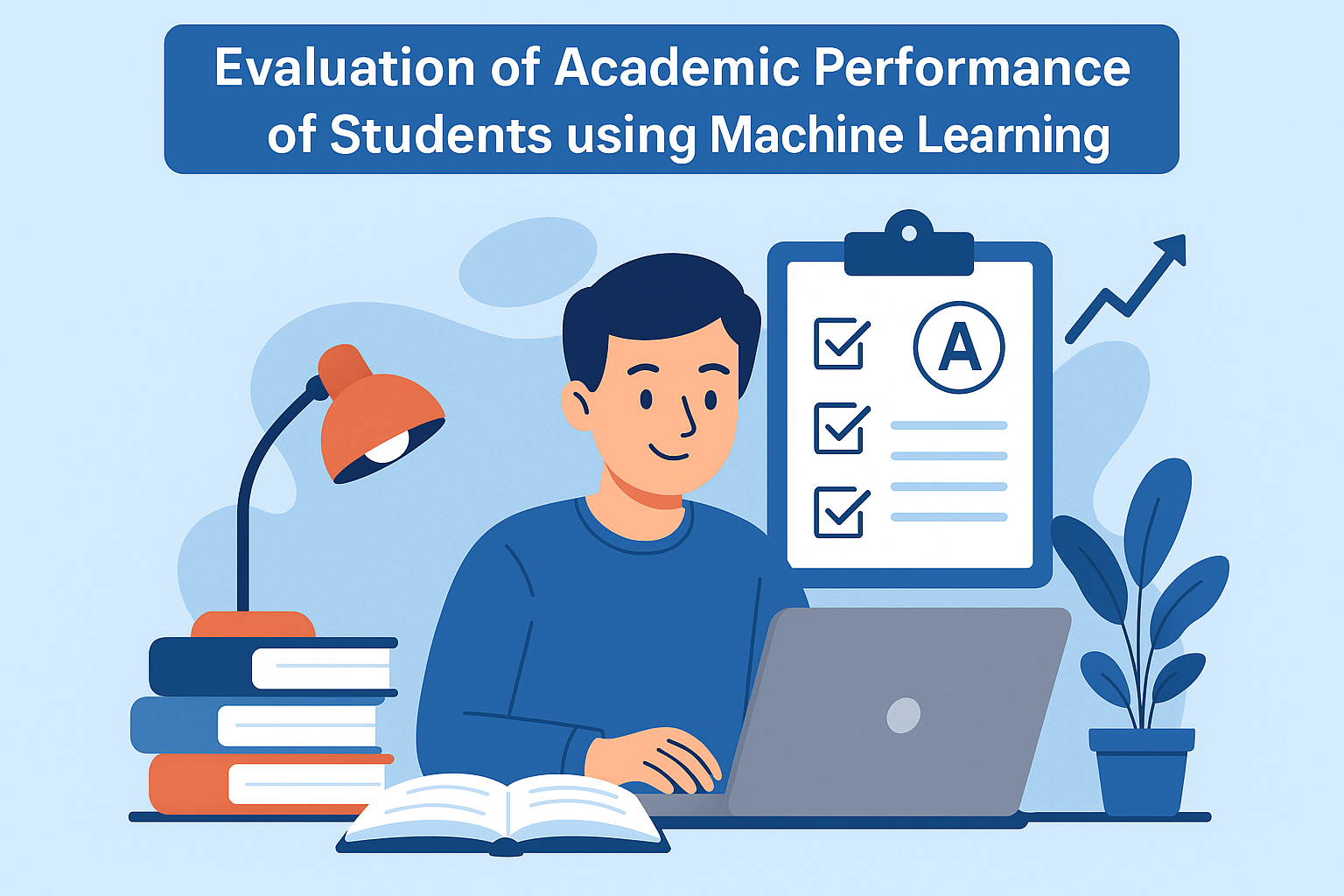
In the modern educational landscape, evaluating student academic performance is crucial for identifying learning patterns, predicting outcomes, and enhancing the overall educational experience. This project leverages machine learning techniques, specifically the Random Forest algorithm, to analyze student performance based on multiple influencing factors such as attendance, parental education, test preparation, and GPA. The system includes attendance indicators, a 10-point GPA calculation system, and an internal marks distribution mechanism. Additionally, it provides a prediction feature to help students assess their expected grades before final exams. The project also divides functionalities between the admin and student modules for efficient management.
In the evolving landscape of education, evaluating student academic performance is critical for identifying learning patterns, predicting outcomes, and enhancing the overall educational experience. This project integrates machine learning techniques (Random Forest Algorithm) to analyze student performance based on multiple factors such as attendance, mid-exam scores, quizzes, assignments, and final exams. By leveraging data-driven insights, this system helps educators predict students’ performance, identify at-risk students, and improve teaching methodologies. The implementation includes an interactive dashboard for students and admins, offering real-time performance analysis, attendance tracking, GPA prediction, and report generation.
Introduction:
Academic performance evaluation plays a vital role in understanding student progress and identifying areas for improvement. Traditional methods rely on manual analysis and subjective judgment, which may not always be accurate. This project implements a predictive model using the Random Forest algorithm to analyze various student performance metrics and predict final grades. The integration of attendance indicators, GPA calculation, and a marks distribution system enhances the reliability of the analysis.
Problem Statement: The existing academic evaluation methods suffer from inefficiencies such as:
- Limited insights into students’ academic progress.
- Subjective and biased assessment approaches.
- Inability to predict student performance based on historical data.
- Lack of integration with technological advancements for proactive decision-making.
- Absence of attendance-based performance indicators.
Existing System and Disadvantages: The current student performance evaluation methods primarily rely on:
- Manual grading and performance tracking.
- Periodic assessments that fail to capture real-time performance trends.
- Lack of predictive analytics for identifying at-risk students.
Disadvantages:
- Time-consuming and prone to human errors.
- Inefficient in analyzing multiple influencing factors.
- Inability to provide personalized academic support to students.
- No attendance-based evaluation mechanisms.
Proposed System and Advantages:
The proposed system integrates machine learning techniques, utilizing the Random Forest algorithm to analyze student performance based on historical and real-time data. This system leverages datasets that include students’ scores, attendance, parental education, and test preparation data to generate insights into academic progress.
This project integrates machine learning (Random Forest Algorithm) to analyse and predict student performance dynamically.
- Real-time performance tracking via an interactive dashboard.
- AI-powered predictions for GPA, attendance impact, and student progress.
- Admin Panel to manage student records, attendance, and generate reports.
Advantages:
- Automated analysis of large student performance datasets.
- Predictive analytics to identify at-risk students.
- Data-driven insights for educators to improve academic strategies.
- Attendance-based evaluation for better academic monitoring.
- Enhanced decision-making through AI-driven recommendations.
- Automated Analysis – Eliminates human error and manual effort.
- Predictive Insights – Helps identify at-risk students before final exams.
- Interactive Reports – Provides visual analytics for decision-making.
- Better Academic Planning – Supports educators in designing personalized learning strategies.
Modules:
1. Admin Module
- Manage student data – Add student records.
- Configure attendance & performance indicators – Set criteria for performance analysis.
- Generate reports – Bar and Pie chart visualizations of student performance.
2. Student Module
- View attendance & performance indicators – Check attendance status and subject-wise performance.
- Assess predicted grades – AI-based GPA calculation and performance forecasting.
- Track academic progress – Graph-based performance visualization.
3. Predictive Model Module:
- Implements the Random Forest algorithm for classification and regression.
4. Visualization Module:
- Generates graphical insights for better understanding.
Algorithms:
Random Forest Algorithm:
Supervised learning technique used for both classification and regression. Works by combining multiple decision trees for better accuracy and reduced overfitting. Feature Importance Analysis – Determines the impact of attendance, assignments, quizzes, and exams on performance.
Software Requirements:
- Programming Language: Python
- Framework: Flask (for web-based implementation)
- Database: MySQL (for data storage and management)
- Libraries: Pandas, NumPy, Scikit-learn, Matplotlib, Seaborn
Hardware Requirements:
- Processor: Intel i5 or higher
- RAM: 8GB or more
- Storage: 100GB HDD or SSD
- GPU: (Optional for faster computations)
Conclusion and Future Enhancements: This project demonstrates the effectiveness of machine learning techniques, specifically the Random Forest algorithm, in predicting and analyzing student academic performance. The system provides educators with actionable insights to support student learning and academic improvement. Future enhancements may include:
- Integration with real-time student data for more dynamic predictions.
- Expansion to include behavioral and psychological factors.
- Implementation of deep learning techniques for enhanced accuracy.
- Mobile application support for better accessibility.


Reviews
There are no reviews yet.